(Ai) chitecture

Takes buyer preferences and site data as input to generate construction-ready house plans, including bills of materials.
Higharc
Main Purpose
Automating the full lifecycle of residential design for production homebuilders.
Core AI technologies used
Generative Design & Rule-based AI
Notable integration
BIM software (internal)
Type
Homebuilding Automation

Analyzes 2D PDF drawings to automatically detect, label, and measure rooms and wall lengths.
Togal.ai
Main Purpose
Automating the manual process of quantity takeoffs for bidding and cost estimation.
Core AI technologies used
Computer Vision & Deep Learning
Notable integration
Procore, Bluebeam
Type
Estimation & Takeoff Automation

Extracts geometry from BIM plugins; outputs real-time performance feedback, cost-benefit trade-offs, and environmental compliance reports
cove.tool
Main Purpose
Optimizing building performance, reducing embodied/operational carbon, and automating environmental analysis
Core AI technologies used
Machine learning algorithms paired with physics-based simulation engines to predict energy, daylight, and carbon outcomes
Notable integration
Revit, Rhino, SketchUp, and Grasshopper
Type
Sustainability, Decarbonization & Building Performance

A web-based generative design tool focused on the earliest stages of urban planning. It helps architects synthesize massive amounts of environmental data to create optimized building footprints that prioritize sustainability and livability.
Digital Blue Foam
Main Purpose
Core AI technologies used
Combines urban data synthesis with generative massing to optimize for daylight access, microclimate performance, and program density.
Notable integration
Rhino, Archicad, and Revit.
Type
Early-Stage Sustainable Planning.

A digital twin and urban design tool that integrates financial analysis with spatial planning. It allows for the layering of complex urban data directly onto a 3D site plan, facilitating real-time "optioneering" for large scale developments.
Giraffe
Main Purpose
Core AI technologies used
Uses predictive analytics and generative planning to synthesize environmental performance and financial viability in a unified 3D environment.
Notable integration
Esri ArcGIS, Microsoft Excel, and IFC.
Type
Urban Design and Strategic Planning.

An AI platform developed specifically for the architectural industry. Unlike general image generators, it is trained on curated architectural datasets to ensure that conceptual outputs respect architectural syntax, materiality, and spatial depth.
LookX
Main Purpose
Core AI technologies used
Employs custom-trained Diffusion models and Large Vision Models (LVMs) designed specifically to understand architectural language and spatial hierarchy.
Notable integration
Rhino, SketchUp, and Revit.
Type
Conceptual Generation and Architectural Visualization.

Starting with a site, context and basic project assumptions, the workflow generates and compares massing and site options. Forma returns rapid volumetric studies and environmental analyses, and can hand proposals into Revit for downstream BIM development.
Autodesk Forma
Main Purpose
Site planning, massing, optioneering, environmental analysis, pre-design and schematic design
Core AI technologies used
Vendor-described AI-powered analyses, design automations, contextual data processing and option exploration
Notable integration
Revit, Rhino, Dynamo, IFC, OBJ
Type
Cloud pre-design and site planning platform
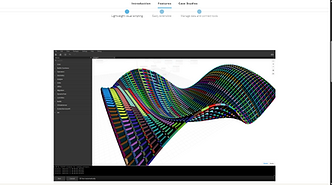
Defining variables, goals and constraints through a Dynamo graph allows Revit to run multiple alternatives, review outcomes and write the selected result back into the BIM model.
Generative Design in Revit (with Dynamo)
Main Purpose
Layout optimization, adjacency studies, circulation, parking, seating, view and other BIM-embedded option studies
Core AI technologies used
Goal-based generative design, parametric search, rule-based evaluation and optimization rather than prompt-first image AI
Notable integration
Revit, Dynamo
Type
Built-in Revit generative design feature set

Entering site constraints, zoning assumptions, unit mix, parking, circulation and other deal parameters allows TestFit to generate buildable site and massing schemes, quantity takeoffs and feasibility outputs, then export selected schemes downstream.
TestFit
Main Purpose
Feasibility studies, site planning, parking layouts, unit mix testing, massing and conceptual cost / quantity checks
Core AI technologies used
Constraint-based generative site planning, rapid optimization and real-time feasibility automation; vendor markets it as site planning AI
Notable integration
Revit add-in and export workflows; PDF, CSV and other export routes appear in support documentation
Type
Real estate feasibility and site planning platform

Defining massing, programs, unit mix, rules and geometry allows Finch to generate unit mixes, circulation and floor plans, score results and pass structured models into Revit.
Finch
Main Purpose
Multifamily residential planning, schematic layouts, floor-plan generation, optimization, quick key-figure feedback
Core AI technologies used
Vendor-described AI, graph technology and advanced algorithms for plan generation, scoring and optimization
Notable integration
Revit, Rhino, Grasshopper, Forma
Type
Early design and generative floor-plan platform with BIM connections

Defining site conditions, project constraints and development goals allows the platform to generate residential schemes, metrics and blueprint-style outputs for feasibility, concept and schematic stages.
ARCHITEChTURES
Main Purpose
Residential feasibility, conceptual design, schematic design, developer-facing option generation
Core AI technologies used
Vendor-described generative AI for residential building design, optimization and rapid scheme generation
Notable integration
Official site emphasizes BIM / CAD output and a BIM-oriented workflow; broad third-party integration details are less explicit on the main site
Type
Cloud generative building-design platform

Describing rooms, size, shape and number of floors in plain language allows Maket to generate editable residential layouts with dimensions. The same workspace supports iteration and style visualization.
Maket
Main Purpose
Residential floor plans, renovation exploration, quick homeowner / builder options, early-stage home design
Core AI technologies used
Generative AI with conversational input for residential floor-plan creation and visualization
Notable integration
The official site centers on an all-in-one web workflow; major professional BIM integrations are less central than in tools like Revit, Forma or Snaptrude
Type
Cloud AI floor-plan and residential design tool

Translating programmatic requirements into structured planning logic allows the generation of 3D space-planning options, area tracking and transfer of the project into Revit without restarting from scratch.
Hypar
Main Purpose
Space planning, repeatable building-system logic, workplace and sector-specific planning, automation of early design workflows
Core AI technologies used
Design automation and structured space-planning logic; more rule / workflow automation than prompt-driven generative AI
Notable integration
Revit and Hypar for Revit workflows
Type
Cloud design automation and space-planning platform

Combining site analysis, programming, massing, BIM and presentation in one connected model allows Snaptrude to support a continuous workflow. Early massing can be converted into BIM-ready building elements and exported to Revit.
Snaptrude
Main Purpose
Concept design, massing, floor plans, programming, concept-to-BIM workflow, collaborative early-stage design
Core AI technologies used
Vendor-described AI agents for zoning, site analysis, massing, floor plans and BIM acceleration
Notable integration
Revit export and BIM mode; organization / enterprise collaboration tools
Type
AI-native BIM and concept-design platform

Analyzing a parcel, planning controls and market or due-diligence data allows the generation of conceptual development options and feasibility outputs. The platform also positions AI-assisted permit and code precheck as part of the workflow.
Archistar
Main Purpose
Development feasibility, due diligence, site selection, concept generation, planning-rule and permit precheck
Core AI technologies used
AI-powered site analysis, planning-rule checking, feasibility analytics and generative design for property development
Notable integration
Official site highlights development-feasibility, generative design and AI precheck modules; product ecosystem also includes Autodesk Forma-related material
Type
Property research, generative design and development-feasibility platform